Is It Smart to Borrow Conservatively Against a Rolex?
It can be smart to borrow against a Rolex—but only when the loan solves a specific, short-term cash problem and you have a realistic plan to repay it. A watch loan is not income, and a valuable watch is not a substitute for an emergency fund. For a creative professional whose client payment is late, though, borrowing against an asset may be a better option than putting rent, travel, or production costs on a high-interest credit card.
The key is to treat the watch as collateral, not as a windfall. Borrow only what you can repay, use the money for a defined gap, and understand exactly what happens if repayment takes longer than expected. If the numbers do not work without selling the watch or borrowing again, pause before signing.
The short playbook
- Name the gap. Identify the bill or expense, its due date, and when you expect the cash to arrive.
- Borrow less than the maximum. A lender’s offer is not a recommendation about what you can afford.
- Price the full loan. Compare interest, fees, term, and any storage, insurance, or late charges.
- Set a repayment trigger. Decide in advance what you will do if the expected client payment arrives late.
- Protect the watch. Confirm how it is authenticated, valued, stored, insured, and returned after repayment.
Why creatives may consider a watch loan
Freelance income rarely arrives on a tidy, twice-monthly schedule. A photographer might finish a campaign in March and wait until May for the final invoice payment. An actor may earn several weeks’ pay on a production, then have a quiet stretch. A designer could have three clients on paper but one of them move the payment date after the work is already done.
That timing mismatch can create a real cash problem even when the person is financially healthy over the full year. A landlord, crew member, or equipment rental company still expects payment on the date in the contract. In Los Angeles, a production expense due this week does not wait because a client’s accounts-payable department is processing invoices.
Banks often prefer predictable income because it makes repayment easier to assess. Regular pay stubs, steady deposits, and consistent debt payments give a lender a familiar picture. Freelancers may have strong annual earnings but irregular monthly deposits, multiple income sources, or tax returns that look lower than their gross revenue after business expenses. That can make traditional underwriting harder, even when the borrower expects a sizable invoice to clear.
An asset-backed loan evaluates the pledged property as part of the deal. That can make it useful for someone who has valuable collateral but does not fit a conventional income model. It does not mean the loan is automatically easy to qualify for, cheap, or safe. The lender still sets terms, and the borrower still owes the money.
How asset-backed lending works
In a typical asset-backed loan, you pledge an asset as collateral and receive a loan based partly on the lender’s assessment of its value and resale prospects. With a watch-backed loan, the lender may take possession of the Rolex, inspect it, and keep it in secure storage during the loan. If you repay according to the agreement, you reclaim the watch. If you do not, the lender may have rights to sell the collateral, subject to the contract and applicable law.
The loan amount is usually lower than the watch’s estimated resale value. That difference gives the lender room to account for price movement, selling costs, and the time it may take to find a buyer. The valuation is not necessarily the same as the price you paid, the insured replacement value, or the amount a private buyer might offer you.
Term to check What to ask Valuation How was the watch valued, and what comparable sales or market data were used? Loan-to-value What portion of the assessed value can you borrow, and can that amount change? Total cost What are the interest rate, origination or storage fees, and total amount due? Repayment When is payment due, and are partial payments or early repayment allowed? Default What happens after a missed payment, and when could the lender sell the watch? Care and insurance Where is the watch held, how is it protected, and who bears the risk of loss?Why a Rolex can work as collateral—and where the risk is
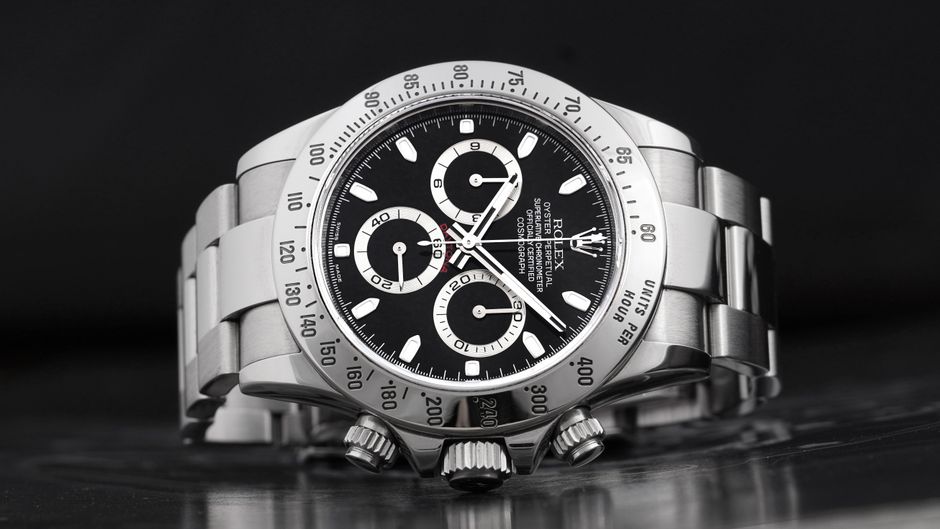
Rolexes are widely recognized, and many models have active resale markets. That can make a Rolex a more practical luxury asset to finance against than an item with a small pool of potential buyers. Still, “liquid” does not mean “cash in your account today at the price you want.” Model, reference, condition, originality, box and papers, service history, and current buyer demand can all affect the offer.
Secondary-market prices also move. For example, consider the scenario of Rolex secondary-market prices rising 1.7% in Q1 2026. That would be a modest increase in that period—not a promise that prices will keep rising, and not a reason to borrow more. A lender may value your particular watch differently from a broad market index, and the price you could realize in a quick sale may be below an optimistic online listing.
Market visibility matters. Ask whether the lender uses global secondary market pricing visibility to compare recent transactions across regions and models, rather than relying on a vague estimate. Ask, too, how its authentication and valuation process works: who inspects the watch, what is checked, whether the assessment is documented, and how the lender handles aftermarket parts or missing papers.
Companies such as Diamond Banc operate in the collateral-lending and luxury-asset space, while a traditional wealth-management firm such as Morgan Stanley may be relevant to a broader conversation about liquidity and portfolio planning. Those are different kinds of services, and mentioning either does not mean it is right for a particular borrower. Compare the actual written terms and consider whether an independent financial or legal professional should review them.
Use the defined-gap test
Before handing over a watch, put the cash need on one page. A defined gap is a known amount for a known purpose, with a plausible repayment source and date. “I need $8,000 to cover a studio rental and crew costs until a signed client invoice is paid” is a defined gap. “I want extra cash because business has been slow” is not.
Build the repayment plan around timing, not optimism
- Write down the invoice amount, the client’s payment terms, and the last time that client paid late.
- Use the date money is likely to clear—not the date the invoice is due—as your working estimate.
- Check what else will be due before then: rent, taxes, insurance, payroll, and minimum debt payments.
- Set aside repayment money as soon as the client pays rather than treating the deposit as spendable income.
- Choose a backup plan if the payment is delayed, such as reducing discretionary spending or arranging a documented extension with the lender.
This is where many borrowers get into trouble. They count an invoice as cash before it arrives, then use the loan to cover a second gap when the first payment slips. That can turn short-term financing into an expensive cycle. A loan that depends on one client paying exactly on time is fragile; a loan with a realistic buffer is safer.
Do the math before you pledge the watch
Imagine thelosangelestribune.com you need $6,000 for a production expense and expect a client to pay in six weeks. The amount to compare is not just “$6,000 versus the value of my Rolex.” It is the total repayment amount, the deadline, and the cost of a delay. Ask the lender to show the payoff figure for the date you expect to repay, and ask what it would be if payment arrives a month late.
Then compare the loan with realistic alternatives: negotiating a deposit or faster payment with the client, asking a vendor for a short extension, using a lower-cost line of credit if available, or selling an item you are willing to part with. A high-interest credit card is a common bad default: it is convenient, but carrying a balance can make a temporary cash shortfall more expensive than it first appears. The alternative is not automatically better, however. A watch loan can carry meaningful fees and the risk of losing an asset you value.
Do not focus only on the stated interest rate. Look at the total cost in dollars and the amount due by the deadline. Confirm whether interest is simple or compounds, whether fees are deducted from the cash you receive, and whether a missed payment triggers added charges or a sale process. If the agreement is hard to understand, ask for the terms in writing before you pledge the watch.
When borrowing conservatively may make sense
A cautious loan may be reasonable when the need is temporary, the amount is limited, and repayment is tied to a credible source of cash. For example, a freelance director with a signed contract and a reliable client might use a small loan to bridge a short payment delay—provided the total cost is clear and there is a plan for a late check.
It may also be preferable to selling a watch you intend to keep, if the loan’s costs and risks are acceptable. But compare the cost of borrowing with the practical cost of selling and later replacing the watch. There is no universal answer: the right choice depends on the loan terms, market value, personal attachment, and how much uncertainty you can absorb.
When to walk away
- You do not know how or when you will repay.
- You need the maximum amount offered just to cover ongoing living costs.
- Your repayment plan relies on a client who has not signed a contract or confirmed payment timing.
- The lender will not clearly explain fees, custody, insurance, or default procedures.
- You are already juggling overdue bills or taking new debt to pay old debt.
- Losing the watch would create serious financial or personal harm.
Bottom line: borrow only what you can repay
Borrowing against a Rolex can be a useful bridge, not a long-term income strategy. The strongest case is a small loan for a defined gap, backed by a dependable repayment plan and transparent terms. The weakest case is borrowing because the watch has value while hoping that business improves or an invoice arrives on time.

Keep the playbook simple: confirm the watch’s value through a credible authentication and valuation process, compare the full cost with other options, build in room for late payments, and borrow only what you can repay. If you proceed, know the exact payoff date and the consequences of missing it. Then follow through: repay and reclaim the watch.
For Los Angeles creatives, that discipline matters whether you are covering a gap between shoots in Hollywood or waiting on a brand invoice after a meeting near N. Camden Drive in Beverly Hills. The asset may help you manage timing. It cannot make uncertain income certain.